If a heater comes inside when your power goes out, read this while the lights are still on.
Over 1,400 People Went to the ER or Urgent Care for CO in One Texas Blackout. Many Had Done What You'd Do: Brought the Heat Inside.
42% of them were children. I spent a winter looking into why the CO alarm in your hallway is built to stay quiet on exactly that night.

Short on time? See the alarm that sits beside the heater
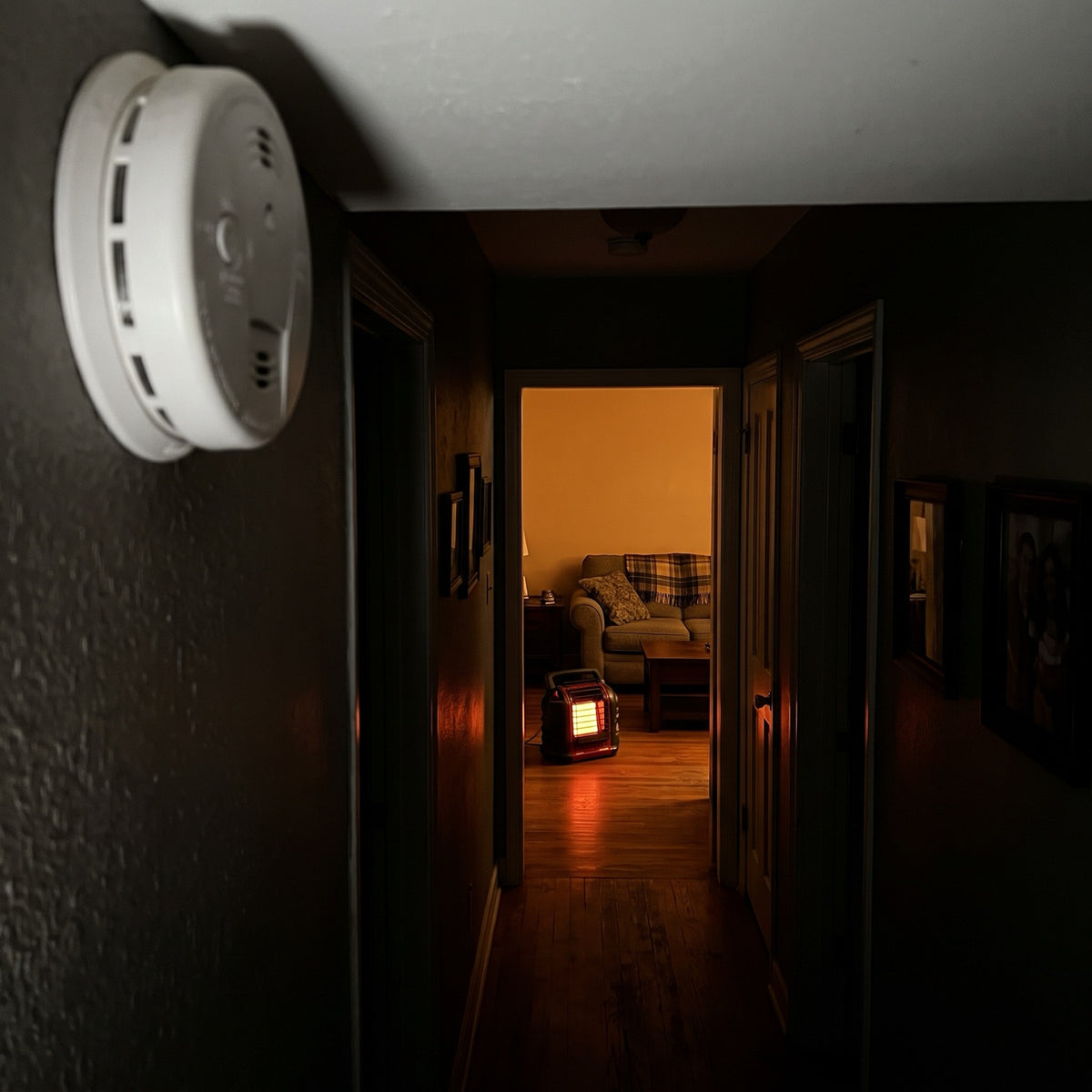
In February 2021, a winter storm took the power out across Texas. For days, homes had no heat.
In Austin, Franklin Peña's apartment had been without electricity for two days. He had a wife and two sons, 12 and 3, and he'd watched the little one shiver in the cold.
On the second freezing night, he brought a charcoal grill inside and burned wood in it to keep them warm. "My desperation was such that I lost all fear or my head," he told reporters later.
The carbon monoxide got all of them. Peña called 911 and stayed on the line for about 30 minutes. He, his wife and their 12-year-old were rushed to the hospital. The 3-year-old was given oxygen. They've since recovered, though they still get headaches. "Any time it gets cold," Peña said, "we become afraid."
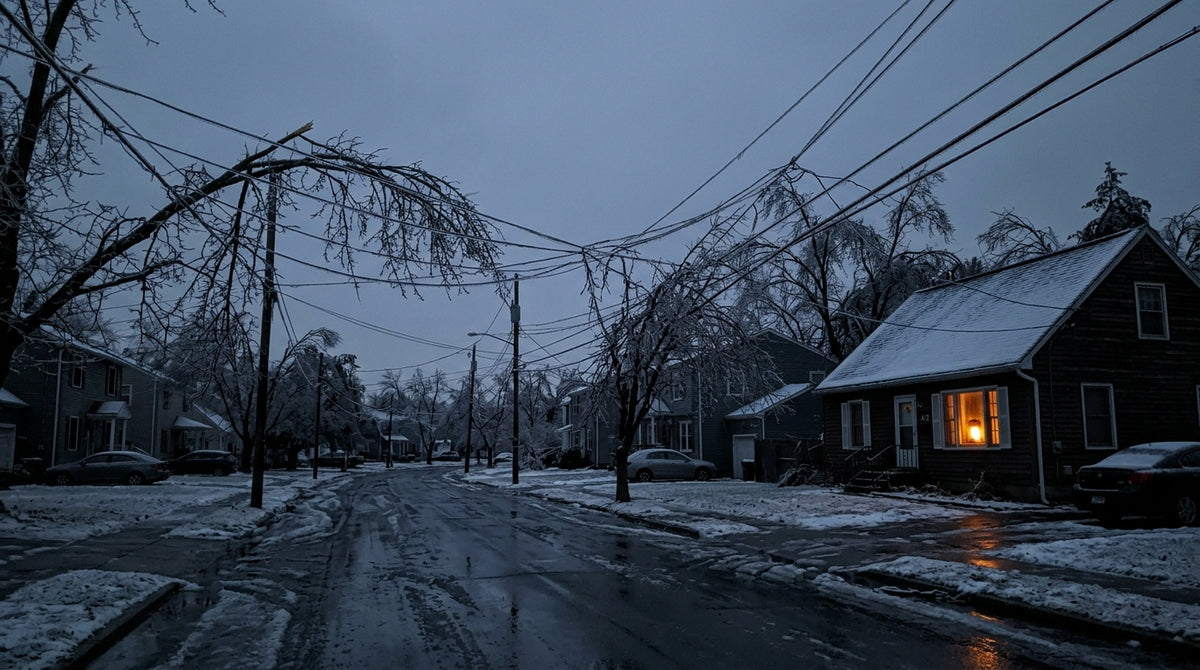
In Houston, a mother ran the family car in the attached garage to keep warm. She and her 7-year-old daughter died.
Across the state, more than 1,400 people went to an ER or urgent care for CO poisoning in that one storm. 42% were children. Many had brought grills inside or run cars in closed spaces, trying to stay warm.
Neither home had a CO alarm. Yours probably does, out in the hallway. But picture where your family would be on that night: one room, the heat a few feet from the kids. So what is that hallway alarm built to do?
You'd think it's simple. CO builds, the alarm goes off, you get everyone out. I spent a winter looking into it, and on a blackout night, that's not how it's built to work.
So if a heater would come inside when the power goes out, read closely. Especially if your kids would be sleeping in that room.
Source: The Texas Tribune and ProPublica, April 29, 2021.
That night, the CO doesn't come from the furnace. It comes from the heat you carry in.
On a normal winter night, your alarm is guarding the furnace. When the power goes, the furnace goes quiet with it, and the danger moves to whatever you bring in to replace it.
The Buddy heater carried up from the garage. The gas oven left on "to heat the house". The generator running by a half-open garage door.

And you bring it to one place. The warmest room, doors shut to hold the heat, where the whole family ends up sleeping. The kids on the couch under every blanket you own. You in the chair, telling yourself you'll stay awake.
CO has no color and no smell. The warm room feels fine. The little one finally stops shivering, and you let yourself close your eyes.
So on a blackout night, the CO is a few feet from your sleeping kids. And the alarm is a room away, out in the hallway.
That alone would be bad. The rule that alarm is built to makes it worse.
The rule says wait for 70. The heater is a few feet from the beds.
The CO alarms in US homes are built to one standard, called UL 2034.
In the 1990s, early alarms went off so often at low levels that in one December, Chicago firefighters answered about 3,500 CO alarm calls in 48 hours. So the standard was rewritten to wait.
Under it, an alarm is allowed to wait 1 to 4 hours at 70 ppm before it sounds. At 30 ppm, it's not supposed to sound at all.
And if yours has a screen? Many show nothing below 30. A commenter who says he spent years as a firefighter wrote: "The lowest reading you'll get is 30."
"It won't go off until you have approximately 70 ppm consistently. So the detector not going off doesn't necessarily prove it's not present."
A YouTube commenter who says they work in HVAC
That rule fits a normal night: a furnace in the basement, an alarm in the hallway, everyone in their own beds.
A blackout turns it upside down. The source is now in the bedroom. Your family is asleep beside it. And the one alarm in the house is a room away, allowed to stay quiet for hours.
People have pushed to change the rule. In December 2024, a petition asked the US Consumer Product Safety Commission to make alarms sound at lower levels and show the number on a screen.
In September 2026, the commission's staff left it to the industry's own standard. Your alarm still waits for 70.
You did everything right. You bought the alarm and put it where the box said. The danger just moved to a room, and a night, that rule never planned for.
Why the usual fixes don't cover that night
Moving your wall alarm next to the heater. It's closer, but it's built to the same rule. It stays quiet until the air is already bad.
A screen on the wall alarm. Many show nothing below 30, and it's still out in the hallway, a room from the heater.
The heater's low oxygen shutoff. It watches the flame, not the CO in the room.
A plug-in alarm. With no battery, it's off the moment the outlet is. With a backup, one maker lists up to 8 hours. The Texas outage ran for days.
Phone alerts. They need your WiFi. Your WiFi needs the power.
Each of these was built for a normal night. None of them sits beside the heater, on its own power, with the reading in plain view while it's still small.
So LastLine built one alarm for that one night
LastLine started from that gap: the danger a few feet from the beds, and the alarm a room away, waiting for 70.
The easy move was another wall alarm, built to the same rule as all the rest. LastLine went the other way. A small alarm that runs on its own sealed battery, sits right beside the heater, and shows you the CO number from zero.
So instead of trusting a silent hallway, you glance at the side table and see the air your kids are breathing.
One man ran a Buddy heater for a week with the room shut. His detectors never went off.
LastLine is new, so there are no reviews yet, and we won't make any up. This is from someone writing about his own heater and his own alarms.
"I used a Mr Buddy Heater when my house furnace went out for a week until it was repaired. I didn't vent the room and my Carbon monoxide detectors did not go off. Later I research carbon monoxide detectors and learn they won't go off until extremely high levels are detected."
A YouTube comment under a heater video
Maybe the air was fine that week. Maybe it wasn't. An alarm built to wait for 70 can't tell you which. A number beside the heater can.
LastLine: the CO alarm that sits beside the heater
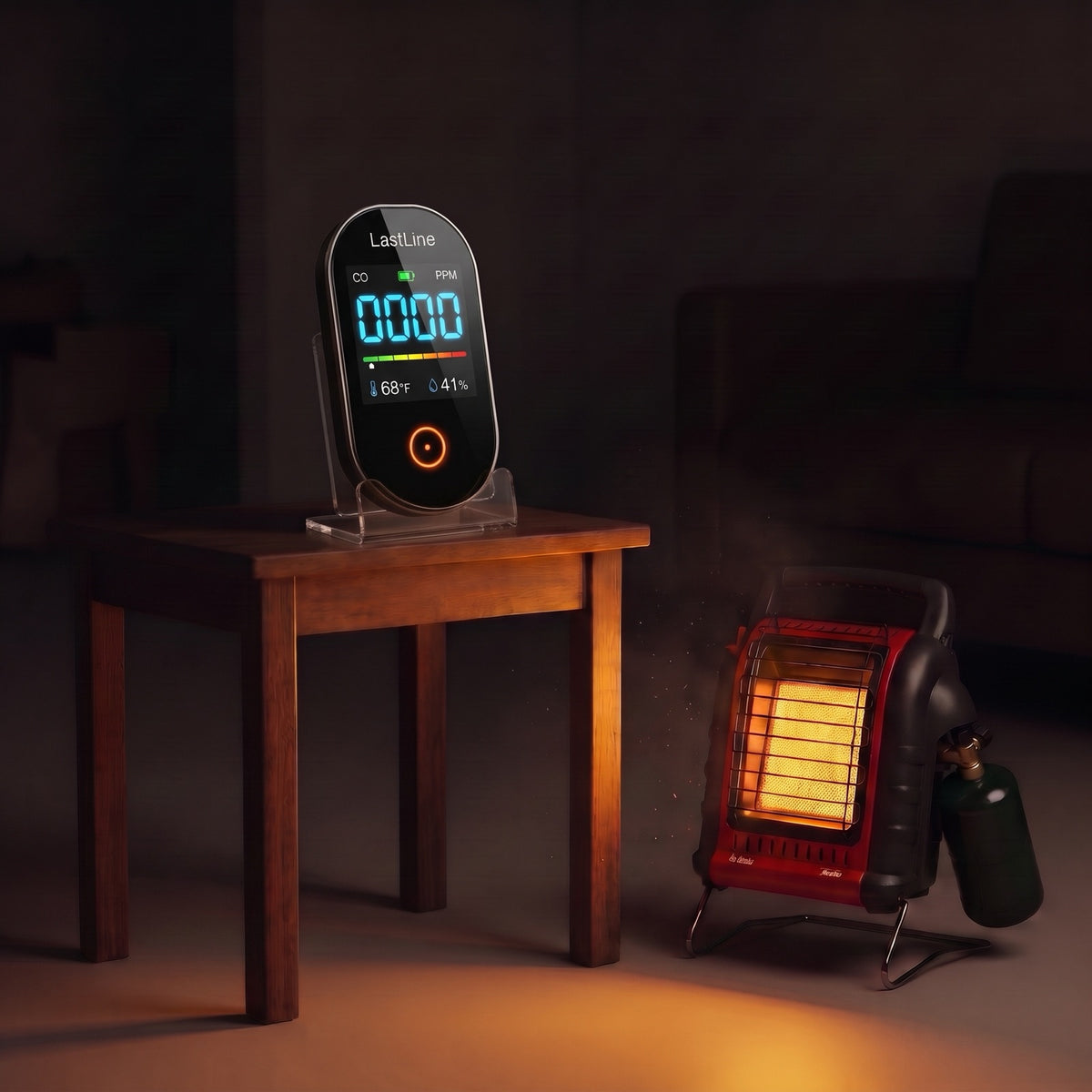
Set it beside the heater or next to the bed, and it's on.
Shows the CO number from zero. You see it start to climb while the alarm in the hallway is still allowed to wait.
Its own sealed battery, with no door. No outlet to go dark with the grid, and no battery to pull at 3 a.m. to stop a chirp.
A loud alarm if CO keeps building. Then everyone goes outside into fresh air and you call 911.
Small enough to move. By the heater, by the door to the garage, or beside whoever's asleep.
No WiFi, no app, no account. Nothing that needs the router.
Keep your heater. Keep the alarm in your hallway. Add LastLine where the heat is.
It only senses carbon monoxide, so toast and showers won't set it off. And most nights it will read 0. That's what you want. You're buying it for the night it doesn't.
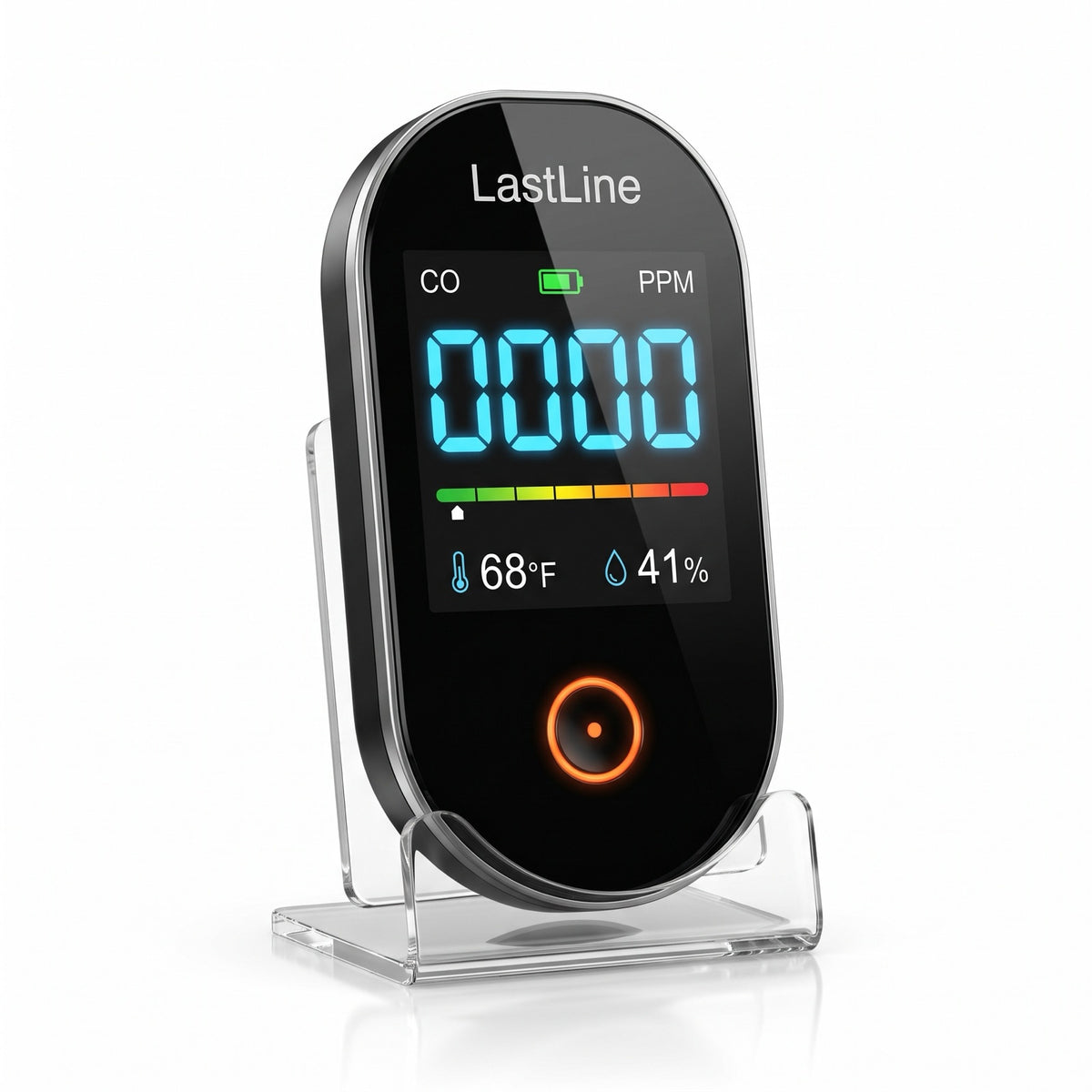
LastLine Blackout CO Alarm
One by the heater, one by the kids, and the rest for the bedrooms
Runs on its own sealed battery. No outlet, WiFi or app. Shows the CO number from zero, all night.
- 1 alarmFor the heater room$59
- 2 alarms$54.50 each$109
- 4 alarms, "The whole house"$44.75 each · covers a 3 bedroom homeMost popular$179
- 6 alarms$39.83 each · home, car and camp$239
Free tracked US shipping · 100-night money-back guarantee
100 nights, because a winter is what it's for
You can't judge an outage alarm in a week. So you get 100 nights from delivery, long enough for a winter of storms. If it's not for you, email support@trylastline.com with your order number, send the alarms back, and we refund the full product price.
If you'd bring heat inside when the power goes out, this isn't optional
I'll be plain, because this is about your kids asleep in a warm room.
In a blackout, the CO comes from the heater you bring into the room where your family sleeps.
The alarm in your hallway is allowed to stay quiet for 1 to 4 hours at 70 ppm, and many show nothing below 30.
LastLine sits beside the heater on its own battery, with the number on the screen from zero.
The next storm, with LastLine on the table
The power goes at 9 p.m. You bring the heater in and light it. You set one LastLine on the side table, a few feet away, and another by the couch where the kids are sleeping.
Before you turn in, you glance at it. The number is 0. Everyone sleeps in the warm room, and this time you sleep too. If CO starts to build while you're still up, you'll see the number move. If it keeps building after you've dozed off, it sounds, right there in the room.
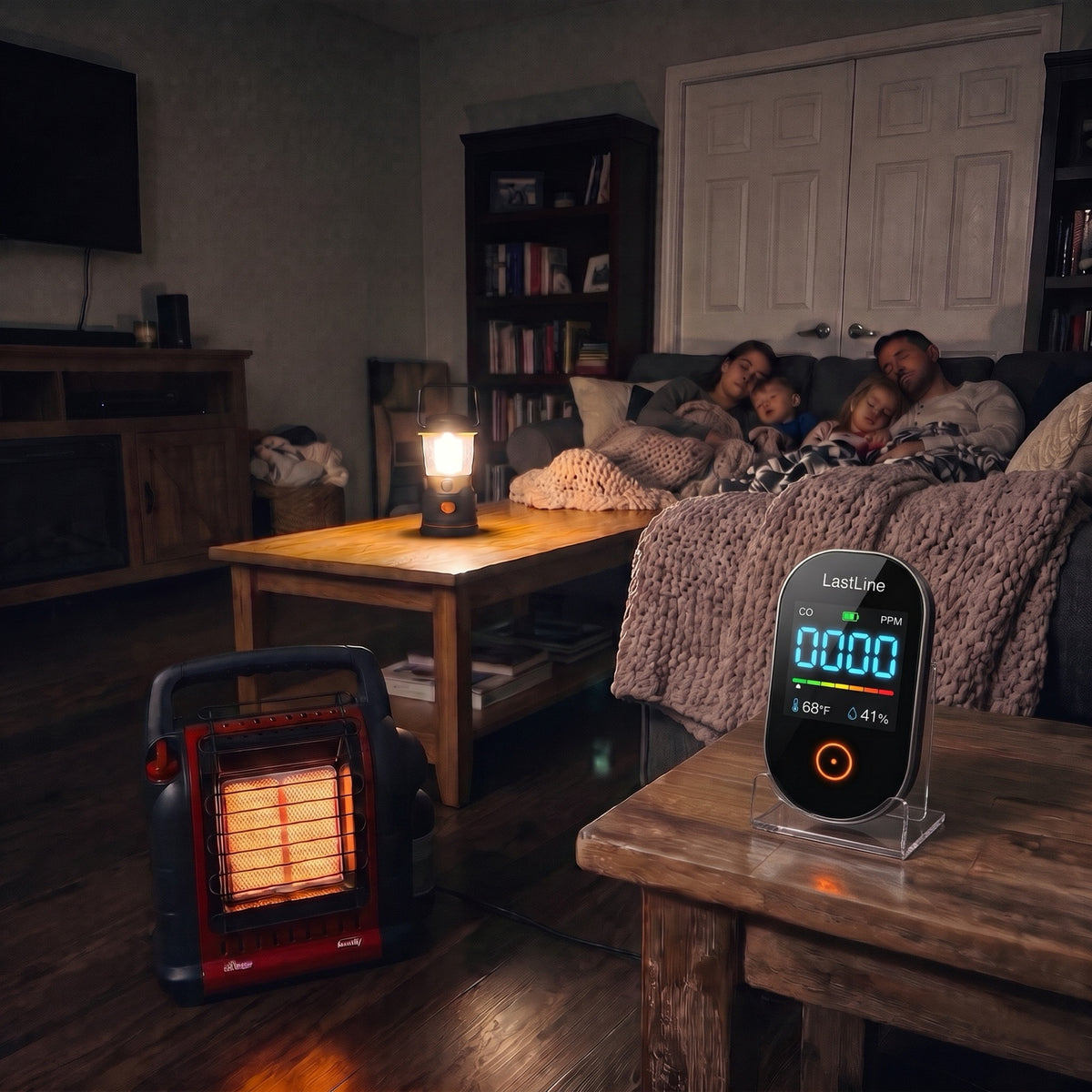
Less than the heater it sits beside
A Buddy heater runs about $90. The alarm that sits beside it is $59.
For the night itself: one near the heater, one where everyone sleeps, one by the door to the garage where the generator runs. When the power's back, they go to the bedrooms. That's the 4 pack, "The whole house", $179, or $44.75 an alarm, for a 3 bedroom home.
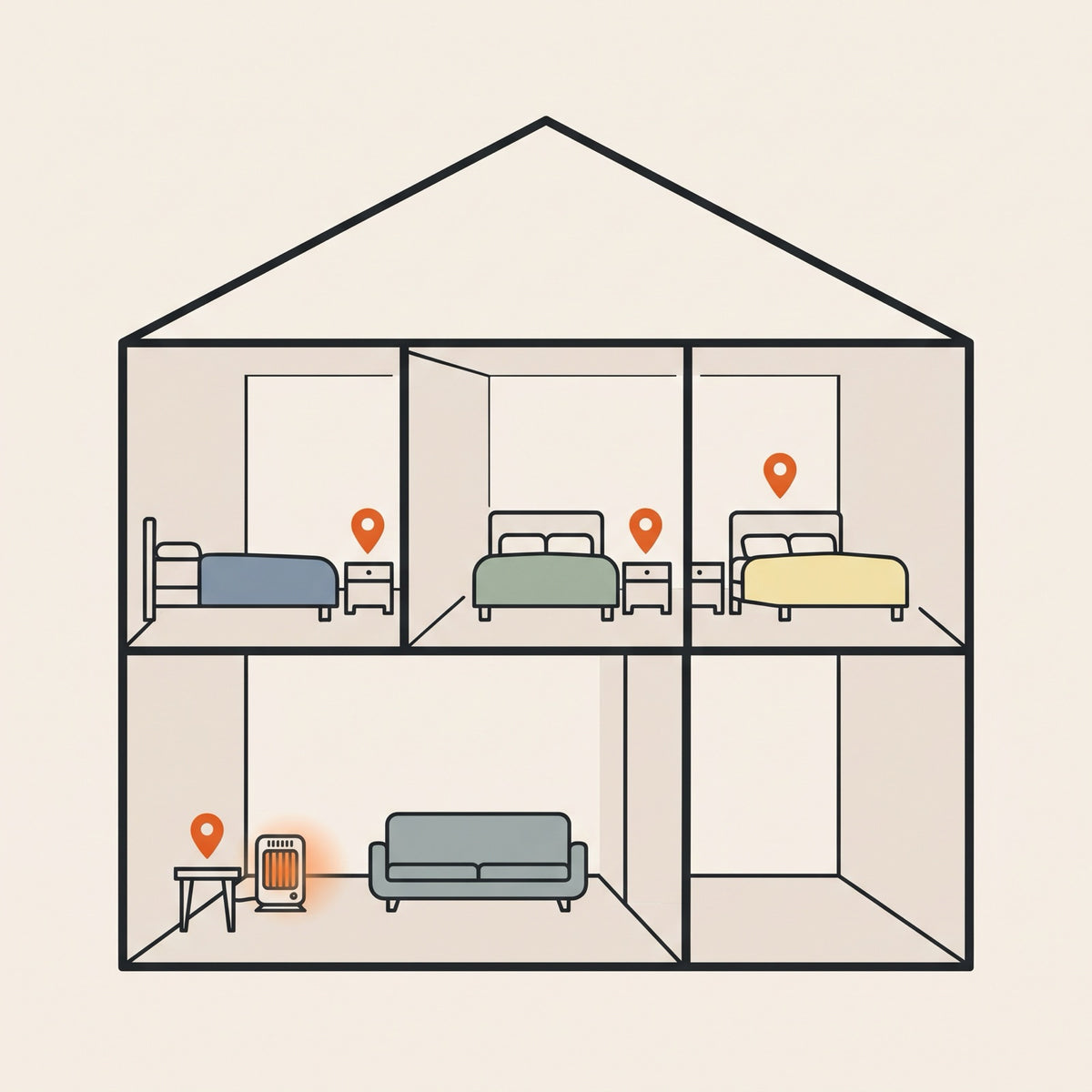
You have two options before the next storm
Option 1: you close this page and trust the hallway. The next storm takes the power after dark, the heater comes in, the kids fall asleep beside it, and the one alarm in the house is a room away, allowed to wait for 70.
Option 2: LastLine is on the side table before the first storm. The power goes, the heat comes in, and every time you walk past, you can see the air.
And if it's not for you, you have 100 nights. Email support@trylastline.com with your order number, send the alarms back, and we refund the full product price.
It's not your fault nobody told you the alarm in your hallway was built to wait. But now you know, and the next storm comes either way.
The button takes you to the LastLine page. The 4 pack, "The whole house", comes selected. Count your bedrooms, add one for the heater room, and change it there if you need to.
Before the first storm
Get LastLine on the side table
Its own sealed battery, the CO number from zero on the screen, and a loud alarm if CO keeps building.
- 1 alarmFor the heater room$59
- 2 alarms$54.50 each$109
- 4 alarms, "The whole house"$44.75 each · covers a 3 bedroom homeMost popular$179
- 6 alarms$39.83 each · home, car and camp$239
Free tracked US shipping · 100-night money-back guarantee
100 nights, because a winter is what it's for
You can't judge an outage alarm in a week. So you get 100 nights from delivery, long enough for a winter of storms. If it's not for you, email support@trylastline.com with your order number, send the alarms back, and we refund the full product price.
P.S. In the Texas storm, a father in Austin watched his 3-year-old shiver in the cold, then brought the heat inside. He did it for his kids. Any of us would want to.
Put a number beside that heater before the first storm: LastLine, on its own battery, a few feet away, showing you the air from zero.