Free US shipping on every order · 100-night money-back guarantee
Account
For the night the power goes out
The Heater's On. The Kids Are Asleep.And Your CO Alarm Is Built to Stay Quiet.
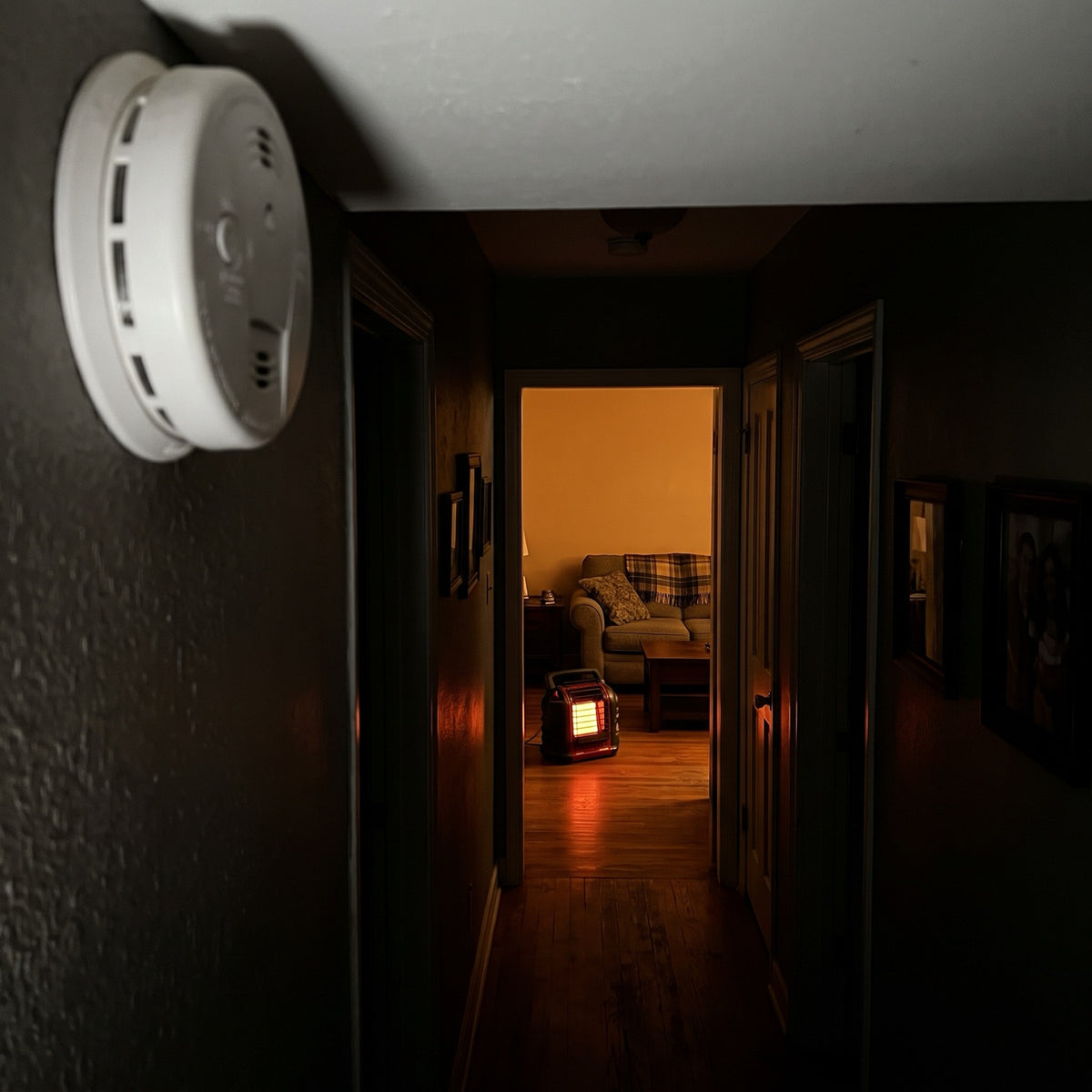
In a blackout, the CO comes from the heater you bring into the room where your family sleeps. The alarm in your hallway is built to stay quiet for 1 to 4 hours at 70 ppm. LastLine sits beside the heater and shows you the number from zero.
Your CO alarm is built to wait. A blackout night is the worst night to wait.
Your alarm follows a rule. The rule says: wait.
1 room
In a blackout, the whole family sleeps in the one warm room. The heater sleeps in there with them.
70 ppm
The level your hallway alarm is built to wait for before it has to sound.
UL 2034 test points, CPSC staff memo, Sep 25, 2026
4 hours
How long it can stay quiet at 70 ppm. The standard gives it 1 to 4 hours.
UL 2034 test points, CPSC staff memo, Sep 25, 2026
30 days
How long it is built to stay quiet at 30 ppm.
UL 2034 test points, CPSC staff memo, Sep 25, 2026
Nothing
What most alarms show you below 30 ppm. No number. The best seller has lights only.
Best-selling battery CO alarm on Amazon, listed "with LEDs"
You can't stop the next blackout.But you can see the number beside the heater.
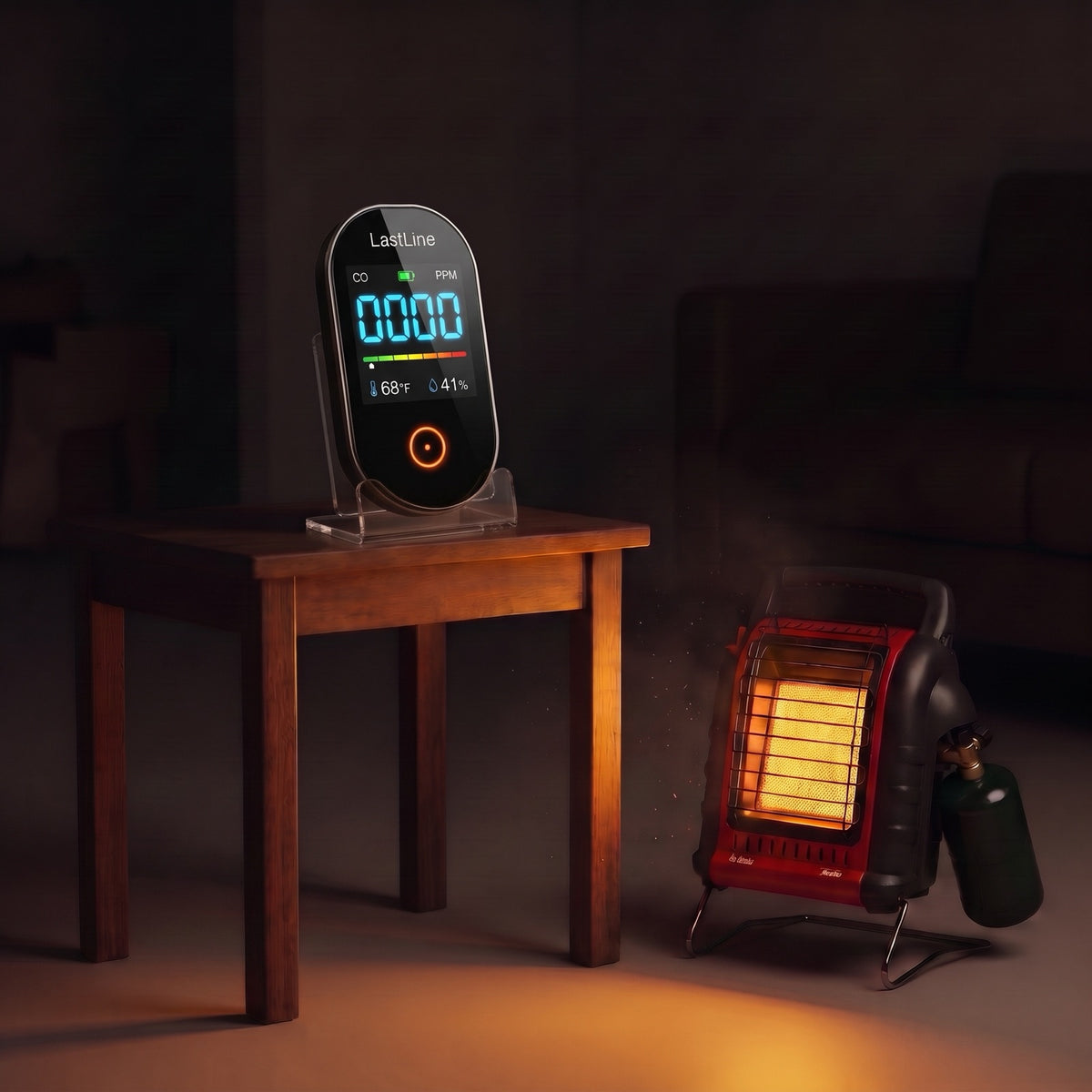
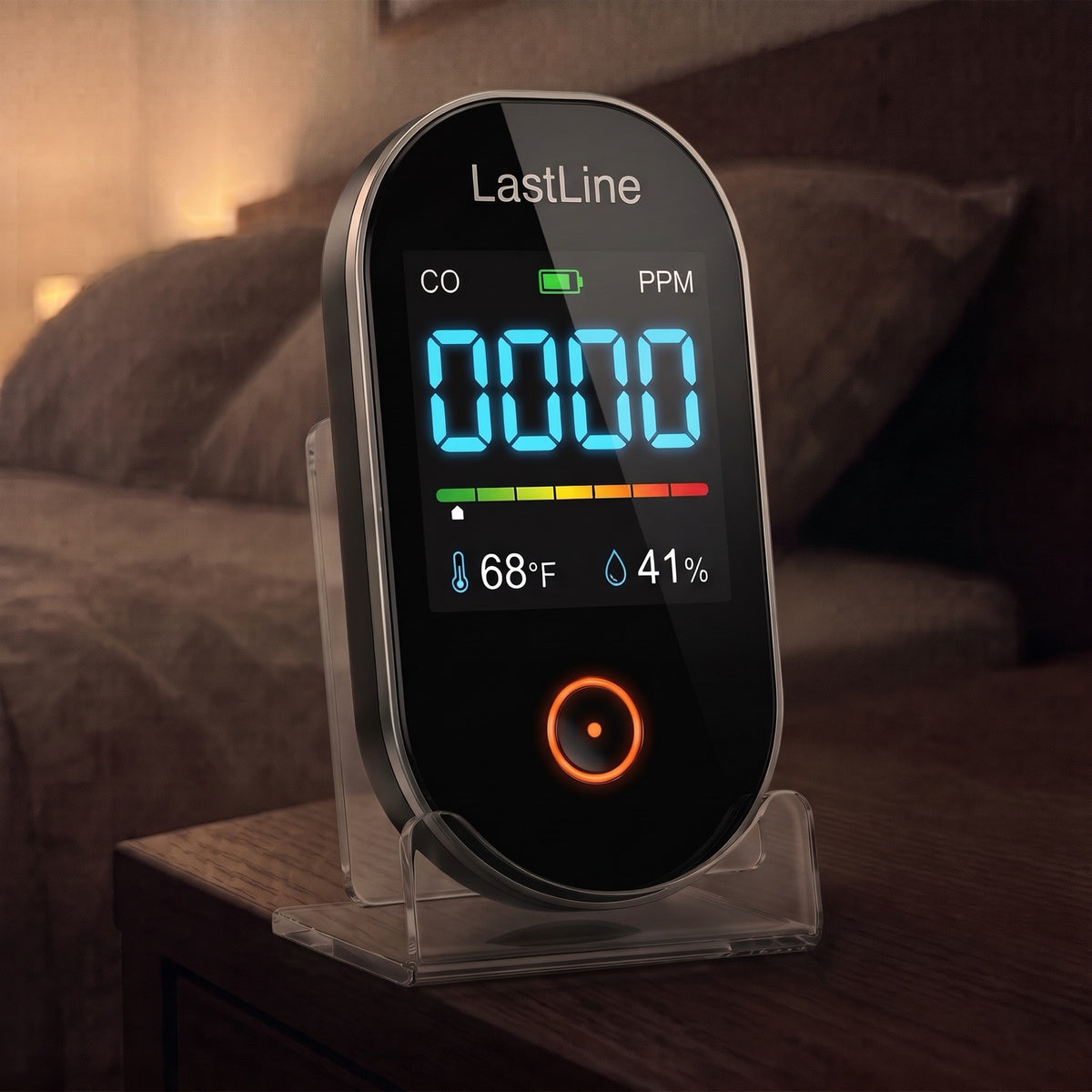
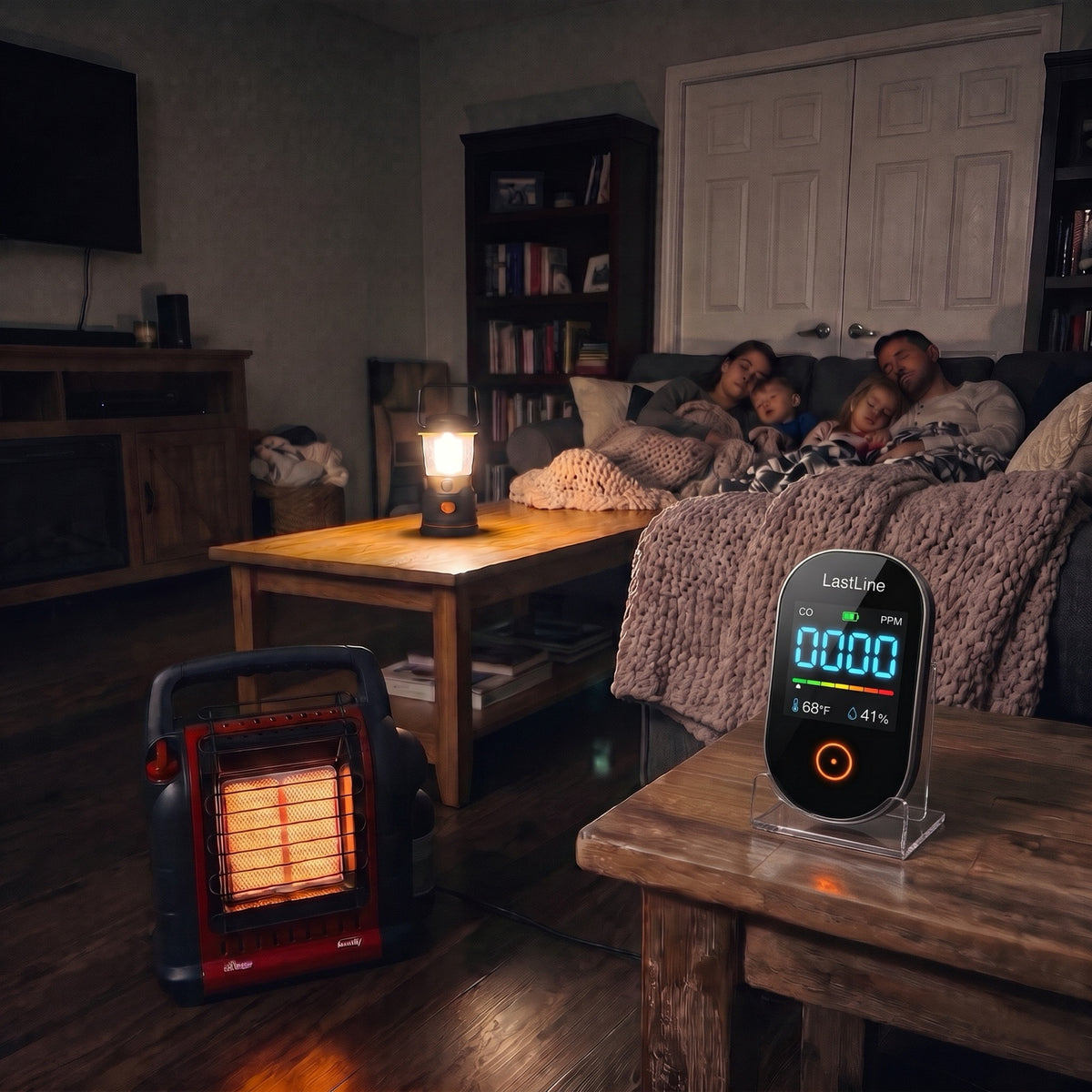
LastLine sits on the table next to the heater, runs on its own battery and shows you the CO number from zero. You check it before bed. If CO keeps rising, it sounds a loud alarm.
of the 1,400+ people treated for CO poisoning in the Texas blackout were children.
February 2021. The power went out across Texas for a week. Families were freezing, so they brought the heat inside. Many brought charcoal grills indoors or ran cars in closed spaces.
More than 1,400 people went to the ER or urgent care for CO poisoning that week, just 400 short of the state's total for all of 2020. At least 11 died.
They weren't careless. They were cold, and they kept their kids warm. Nothing in that room was showing them the number.
The Texas Tribune and ProPublica, Apr 29, 2021: Texas enabled the worst carbon monoxide poisoning catastrophe in recent U.S. history
Don't take our word for it. It's in the public record.
Open them and read them yourself.
ArticleThe Texas Tribune and ProPublica · April 29, 2021
Texas enabled the worst carbon monoxide poisoning catastrophe in recent U.S. history
Families lost power for a week and brought the heat inside to survive. More than 1,400 people sought emergency care for CO poisoning. Children were 42% of them.
PDFU.S. Consumer Product Safety Commission · September 25, 2026
Staff update on Petition CP 25-1, requirements for CO alarms
The rule your alarm is built to: no alarm at 30 ppm for 30 days, and an alarm at 70 ppm only after 60 to 240 minutes. A petition filed in December 2024 asks for alarms that sound sooner and screens accurate to 3 ppm.
Use of CO alarms to prevent poisonings during a power outage, North Carolina
An ice storm cut the power to 79% of homes in one county. In the 9 days after, 124 people were poisoned by CO. 96% of the severe cases were in homes with no working CO alarm.
CO has no smell and no colour. Here's what your alarm sleeps through, number by number. Below 70, it isn't required to make a sound.
0 to 5 ppm
Normal air in a home
The EPA puts average levels in homes without gas stoves at 0.5 to 5 ppm. It's what you want to see before bed.
EPA, Carbon monoxide's impact on indoor air quality
9 ppm
The EPA's limit for outdoor air
The most outdoor air is allowed to average over 8 hours.
EPA, National Ambient Air Quality Standards for CO
30 ppm
Near a badly adjusted gas stove
The EPA says levels near a poorly adjusted stove may be 30 ppm or higher. Your alarm is built to stay quiet here for 30 days.
EPA; UL 2034 via CPSC staff memo, 2026
35 ppm
The recommended limit at work
NIOSH says workers should average no more than 35 ppm over a shift. Your alarm stays quiet.
NIOSH recommended exposure limit, listed by OSHA
50 ppm
The legal limit at work
OSHA's legal limit for a worker over an 8-hour shift. Your alarm still isn't required to sound.
OSHA permissible exposure limit
70 ppm
Now your alarm has to sound
Within 1 to 4 hours.
UL 2034 test points, CPSC staff memo, 2026
Those work limits are for healthy adults who are awake. On a blackout night, your kids are asleep in one room, next to the heater. LastLine shows you the number all night.
Sources: EPA, NIOSH, OSHA, and the UL 2034 test points as listed by the CPSC. We only list levels we could source.
One beside the heater. One in every room where someone sleeps.
Free US shipping · 100-night guarantee
LastLine Blackout CO Alarm
Goes where the heat is. Shows you the number. Runs on its own battery.
Count the rooms where someone sleeps, then add one for the heater.
$44.75 per alarm. Pack savings already applied.
Guaranteed secure checkout
Free US shipping
100-night money-back guarantee
Own battery, no WiFi
In a blackout, the CO comes from the heat you bring inside. Your hallway alarm can be rooms away, and it is built to stay quiet for 1 to 4 hours at 70 ppm. LastLine sits right next to the heat and shows you the number.
Take it out of the box. Set it beside the heater, generator door or bed. Look at the number before you sleep. If CO builds, it sounds a loud alarm: get everyone outside into fresh air and call 911.
Free tracked shipping on every US order. Try it for 100 nights. If it is not for you, email us for a full refund.
Reviews
New this winter. Reviews from our first customers land here as they come in.
Check the number. Then sleep.
The power goes out at 9 p.m. You bring the heater into the bedroom and the kids pile in. You set LastLine on the side table and look at it before you turn off the lantern. It reads 0. You sleep.
The heater keeps them warm. LastLine shows you the number all night.
Because of where it is and what it's built to do. It's in the hallway, not beside the heater. It's built to stay quiet for 1 to 4 hours at 70 ppm. And the best seller shows lights, not a number. LastLine sits beside the heater and shows you the number from zero, all night.
Use your heater. The shutoff watches the oxygen at the flame. It doesn't read CO in the room. A clean heater in good shape makes very little. A dirty burner, a second heater or the gas oven going too can change that, and CO has no smell. The number shows you either way.
Some cheap meters on Amazon earn reviews like "it always reads 0 ppm". So check ours yourself. Take it outside near a running car's tailpipe for a few seconds and watch the number move. Bring it back in and watch it settle to 0.
In the room where the heat is, a few feet from the heater and not on top of it, at about the height you breathe when you sit or lie down. With more than one, put one where each person sleeps. The manual shows the distances.
It reads carbon monoxide, not smoke or steam, so toast and showers won't set it off. A gas stove or a candle can make a little CO, and you may see that on the screen. That's the number doing its job.
It runs on a sealed battery, so there's no battery door and no 3 a.m. swap. Nobody gets tempted to pull the battery out to stop the beeping, which is how a lot of hallway alarms end up switched off.
No. It has no WiFi, app, account or outlet to depend on. In a blackout those go first, and an alarm that needs them goes quiet with them.
Yes. It runs on its own battery, so it works wherever you sleep: camper, tent, cabin, hotel room. Set it beside the bed. That's what the 6 pack is for: the house, plus one for the car and one for the go bag.
One beside the heat, then one in each room where someone sleeps. Count your bedrooms and add one. For a 3 bedroom home that's 4, which is why the 4 pack is selected.
Orders ship within 1 to 2 business days with tracking, and US shipping is free. If it's not for you within 100 nights, email us and we'll refund you.