


Keep your heater. See the number.
Blackout CO Alarm for Power Outages
In an outage, the CO comes from the heat you bring inside, far from your hallway alarm.
- Sits right beside the heater, not out in the hallway.
- Shows the CO number, so you see it climb.
- Sealed battery, so it keeps going when the power doesn't.
Keep your wall alarm. Add this by the heat.
Count your bedrooms and add one for the room with the heater.
That's $44.75 per alarm.
100-night money-back guarantee
- No outlet, no WiFi, no account to set up
- Free US shipping, tracked
Take it out of the box. Set it beside the heater, generator door or bed. Glance at the number before you sleep. If CO builds, it sounds a loud alarm: get everyone outside into fresh air and call 911.
If this is your house in a power outage
- The Buddy heater comes up from the garage into the living room.
- Someone turns on the gas oven and leaves the door open, just for the warmth.
- The generator runs by the garage with the door propped open for the cord.
- Everyone drags blankets into the one warm room to sleep.
- Someone lights the camp stove on the counter to heat soup and the kitchen.
- The CO detector in the hallway got its battery pulled the last time it wouldn't stop beeping.
This is how people stay warm when the power's out. Every one of them burns fuel, out of reach of the alarm on the wall.
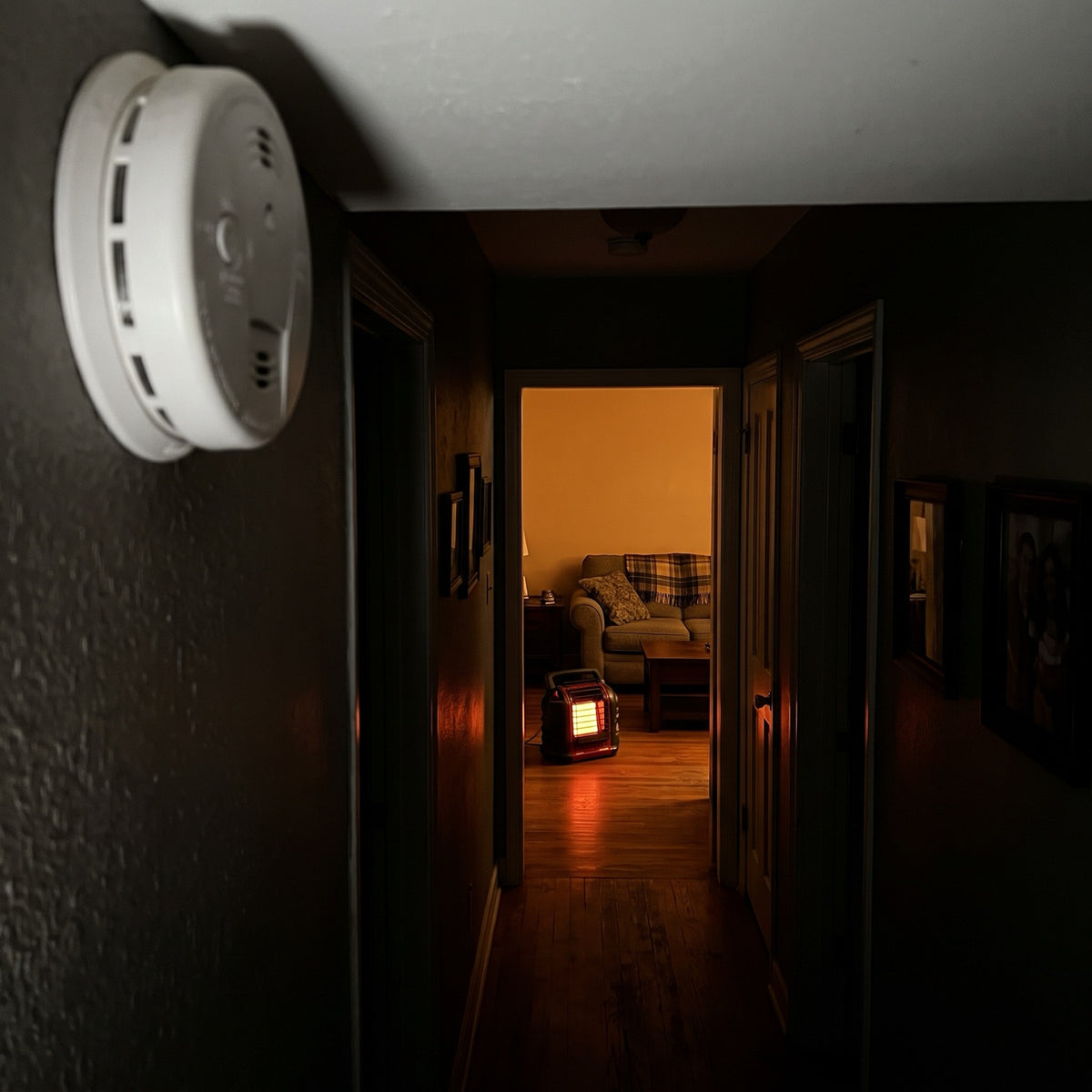
In an outage the danger moves. Your alarm doesn't.
Your detector went up for the furnace and the water heater, because on a normal night that's where CO starts. When the power goes out, it starts wherever you put the heat: beside the couch, in the bedroom, at the garage door.
In the Texas storm of February 2021, more than 1,400 people went to the ER or urgent care for CO poisoning.
42% were children.
Most of them were families who did what you'd do: brought the heat inside and went to sleep.
"knew of several people trying to heat their apartments during the big winter storm that took out the power for days"
A Texas resident, in a YouTube comment
You did the right thing when you bought a detector. The outage moved the danger somewhere it was never placed to watch.
- 100-night money-back guarantee
- Free US shipping
My detector has batteries. Isn't that enough?
- 1
A plug-in alarm with no battery goes dark when the outlet does.
- 2
Phone alerts need your WiFi. Your WiFi needs the power.
- 3
A plug-in screen with a backup cell runs for hours. One maker lists up to 8. The Texas outage ran for days.
- 4
A battery wall alarm keeps going, out in the hallway. It's built to wait until CO reaches 70 parts per million, and then to sound within 1 to 4 hours, and the best seller shows lights, not a number.
- 5
Your heater's low oxygen shutoff watches the air at the flame. It doesn't measure CO in the room.
A blackout does two things at once. It brings the fire inside, next to you, and it takes the power. Each of these was built for a night with neither.
- 100-night money-back guarantee
- Free US shipping
A thermometer for the air by your heater
In a freezing house you don't guess the temperature. You read the thermometer. Do the same with the air beside the heat.
-
1
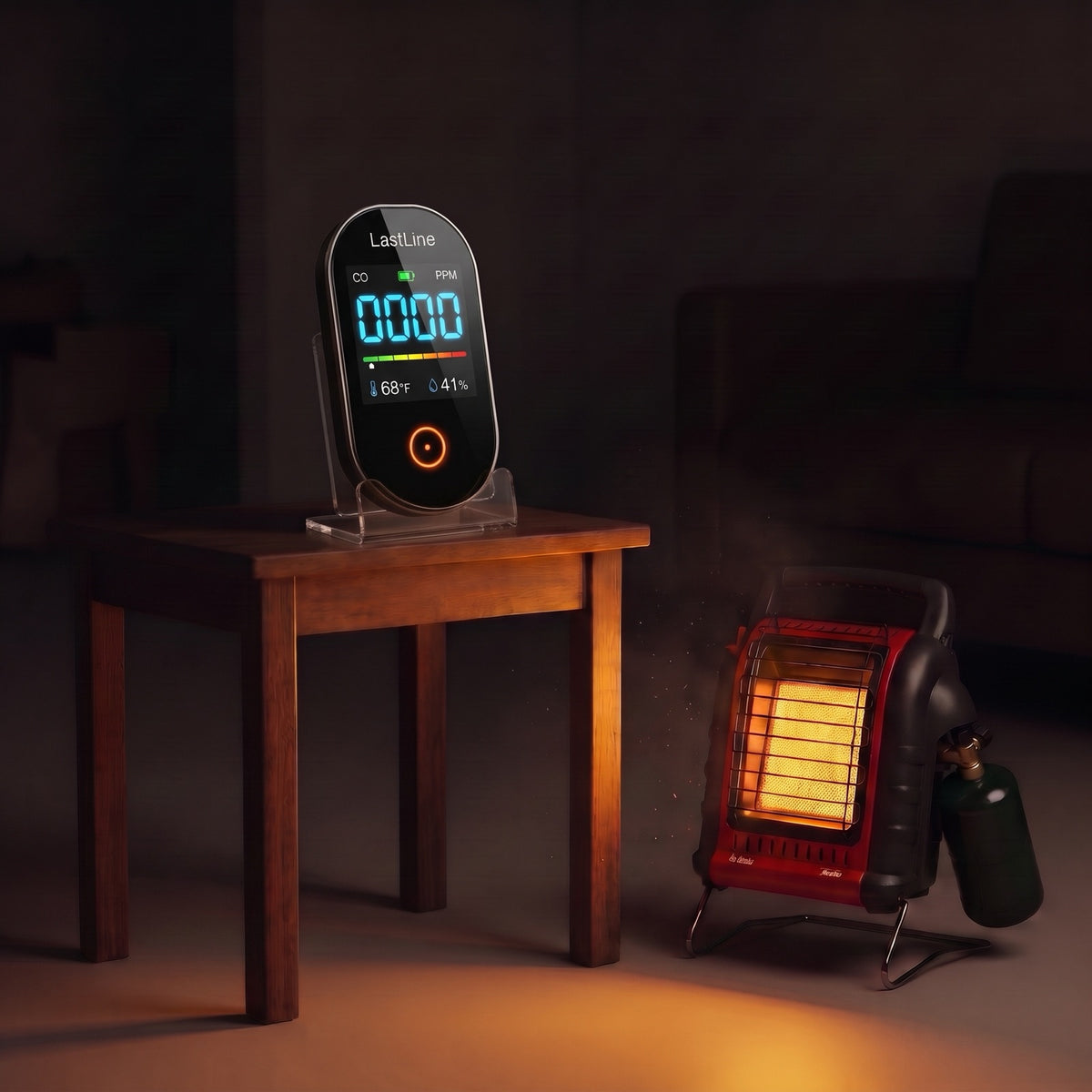
Set it beside the heat
Put it on the table by the heater, by the door to the garage, or next to the bed.
-
2
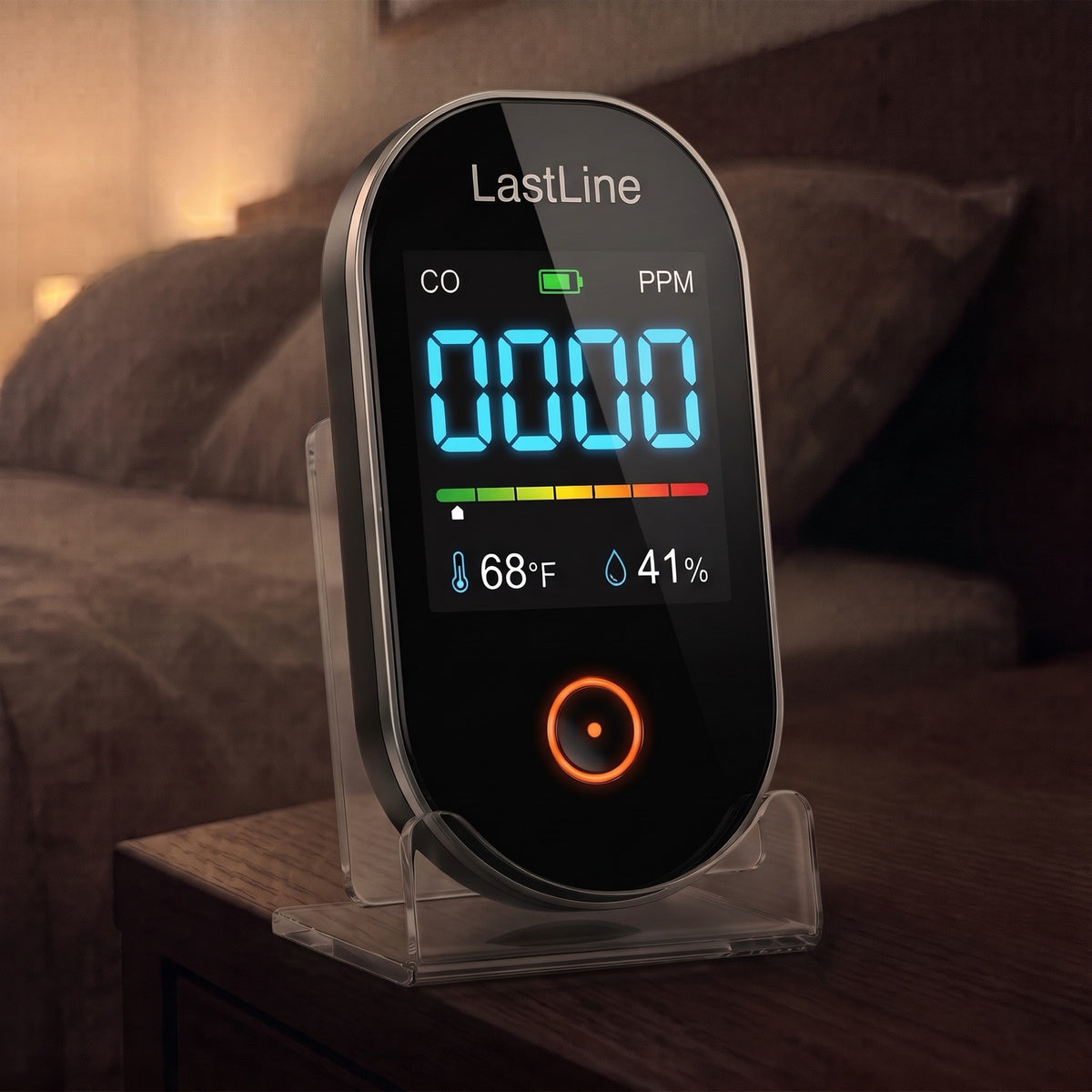
Read the number
On a normal night it reads 0, and you go to sleep knowing that. If it starts to climb, you watch it rise instead of waiting for a siren.
-
3
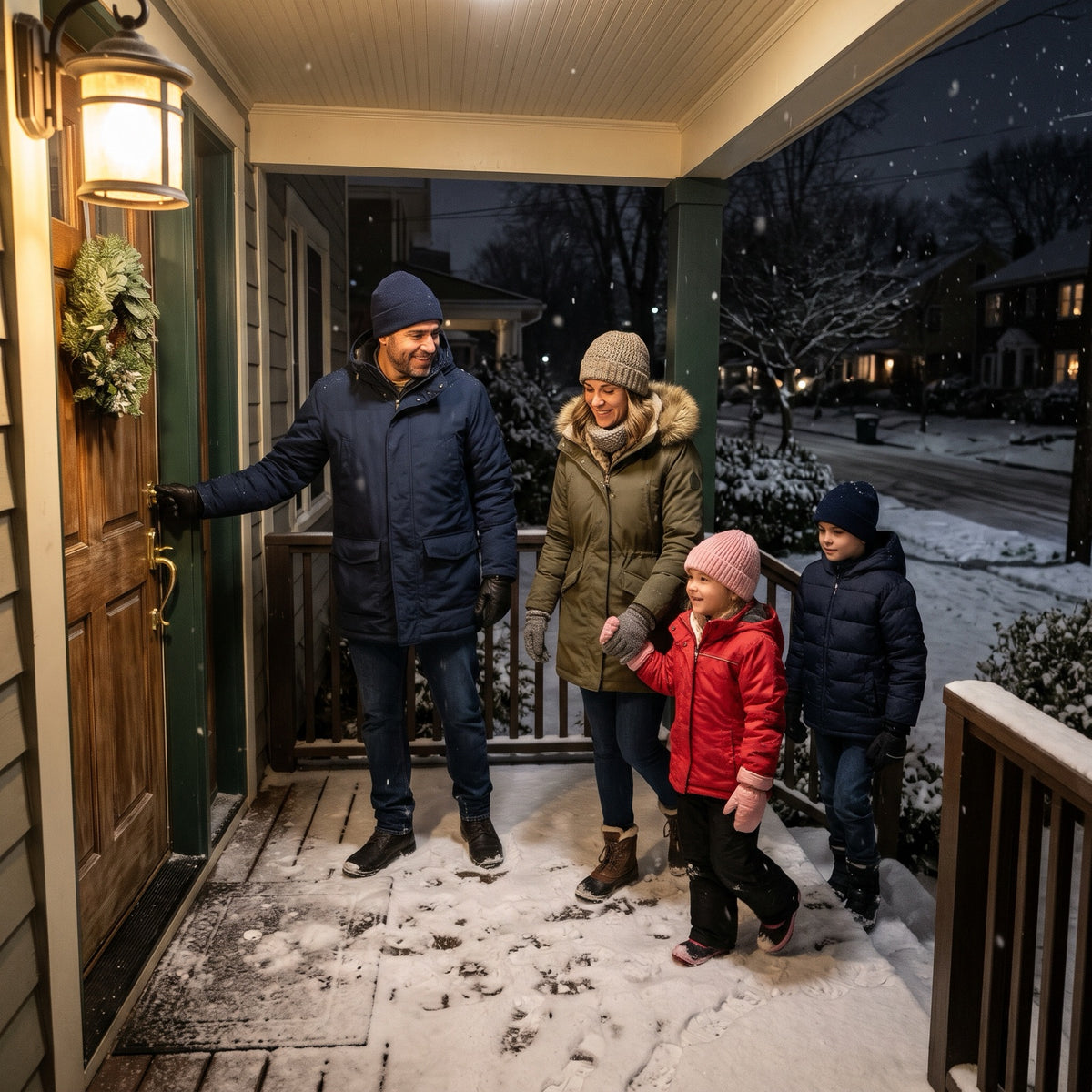
Hear it if CO builds
If CO keeps rising, it sounds a loud alarm. Get everyone outside and call 911.
There's no WiFi, app or outlet on purpose, because those are the first things a blackout takes.
- 100-night money-back guarantee
- Free US shipping
What people say about the alarm on their wall
"my Carbon monoxide detectors did not go off"
"The lowest reading you'll get is 30. I spent many years as a fire fighter."
"It won't go off until you have approximately 70 ppm consistently."
"We had a C.O detector but it didn't go off."
These are comments about the problem and about other detectors, not about ours. No paid firefighters, no made-up reviews. Ours are new, and their reviews appear below as they come in.
- 100-night money-back guarantee
- Free US shipping
What you'll notice, and what you won't
The day it arrives: out of the box and onto the table. Set it down and it's on.
Every normal night: it reads 0. You read it the way you read the thermometer.
The first cold snap: the heater comes out, and the alarm goes on the table beside it.
The night the power goes out: it's already running. You check the number and go to sleep.
Most nights it just reads 0. You're buying it for the one night it doesn't.
- 100-night money-back guarantee
- Free US shipping
100-night money-back guarantee
- 1
Set it up and use it through the winter.
- 2
Not happy within 100 nights? Email us.
- 3
We refund you, no need to argue.
Three alarms, three gaps
Keep the alarm on your wall. Add this one where the heat is.
- 100-night money-back guarantee
- Free US shipping
Questions
Keep it. On a blackout night it still has three gaps. It's on the wall where the furnace danger was, not beside the heater. The best-selling battery model shows lights, not a number. And the US standard has it sound at 70 ppm within 1 to 4 hours. This one sits by the heat and shows the number all night.
Use your heater. The shutoff watches the oxygen at the flame. It doesn't read CO in the room. A clean heater in good shape makes very little. A dirty burner, a second heater or the gas oven going too can change that, and CO has no smell. The number shows you either way.
Some cheap meters on Amazon earn reviews like "it always reads 0 ppm". So check ours yourself. Take it outside near a running car's tailpipe for a few seconds and watch the number move. Bring it back in and watch it settle to 0.
In the room where the heat is, a few feet from the heater and not on top of it, at about the height you breathe when you sit or lie down. With more than one, put one where each person sleeps. The manual shows the distances.
It reads carbon monoxide, not smoke or steam, so toast and showers won't set it off. A gas stove or a candle can make a little CO, and you may see that on the screen. That's the number doing its job.
It runs on a sealed battery, so there's no battery door and no 3 a.m. swap. Nobody gets tempted to pull the battery out to stop the beeping, which is how a lot of hallway alarms end up switched off.
No. It has no WiFi, app, account or outlet to depend on. In a blackout those go first, and an alarm that needs them goes quiet with them.
Yes. It runs on its own battery, so it works wherever you sleep: camper, tent, cabin, hotel room. Set it beside the bed. That's what the 6 pack is for: the house, plus one for the car and one for the go bag.
One beside the heat, then one in each room where someone sleeps. Count your bedrooms and add one. For a 3 bedroom home that's 4, which is why the 4 pack is selected.
Orders ship within 1 to 2 business days with tracking, and US shipping is free. If it's not for you within 100 nights, email us and we'll refund you.
Reviews
New this winter. Reviews from our first customers land here as they come in.
Sleep through the next outage
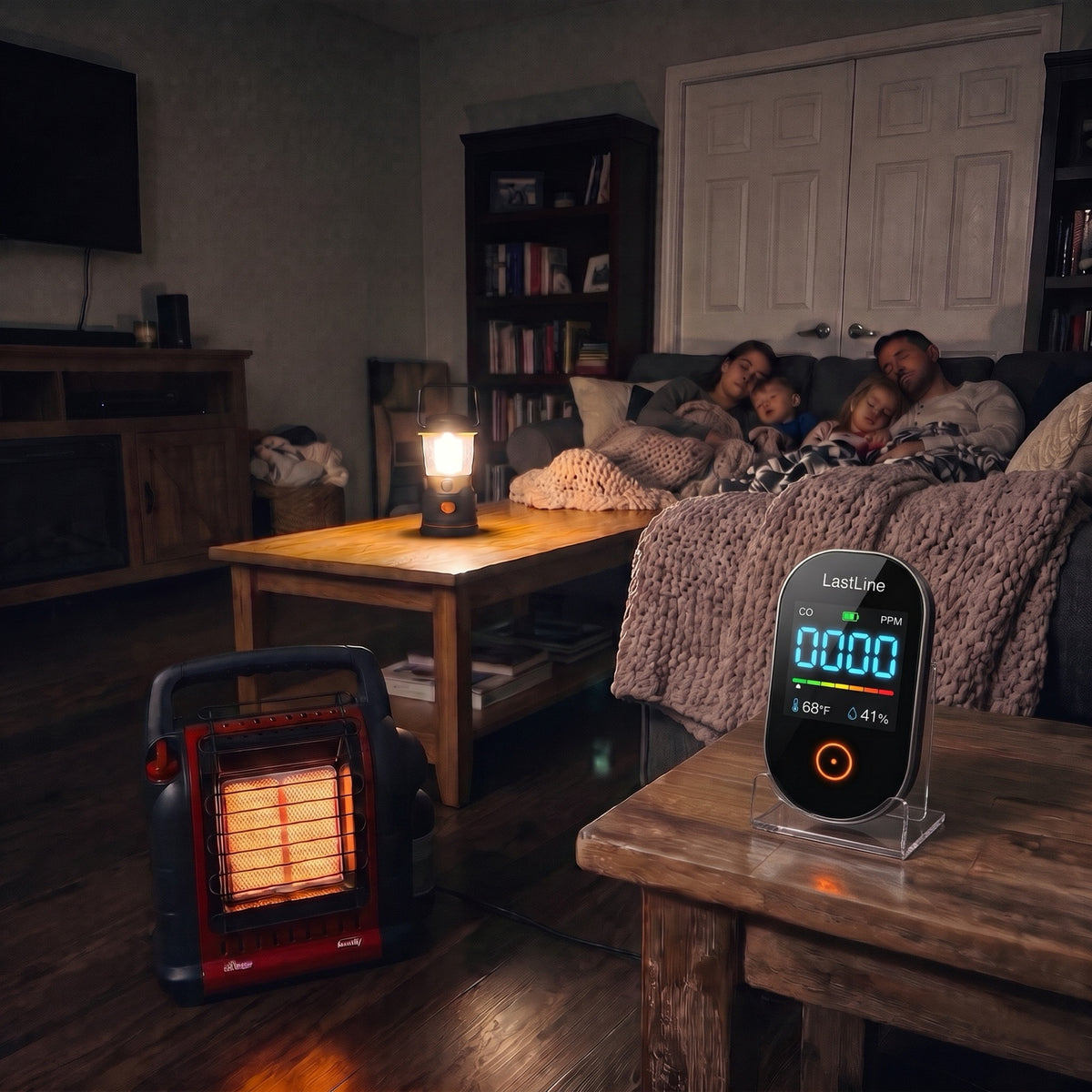
The next storm takes the power at 9 p.m. You light the heater, set the alarm on the side table and check it before bed. It reads 0. Everyone sleeps in the warm room, and you sleep too.
The heater keeps you warm. The number tells you what the air is doing.
Get my blackout alarms